Technology in agriculture: A major transformation in the lives of Rwandans
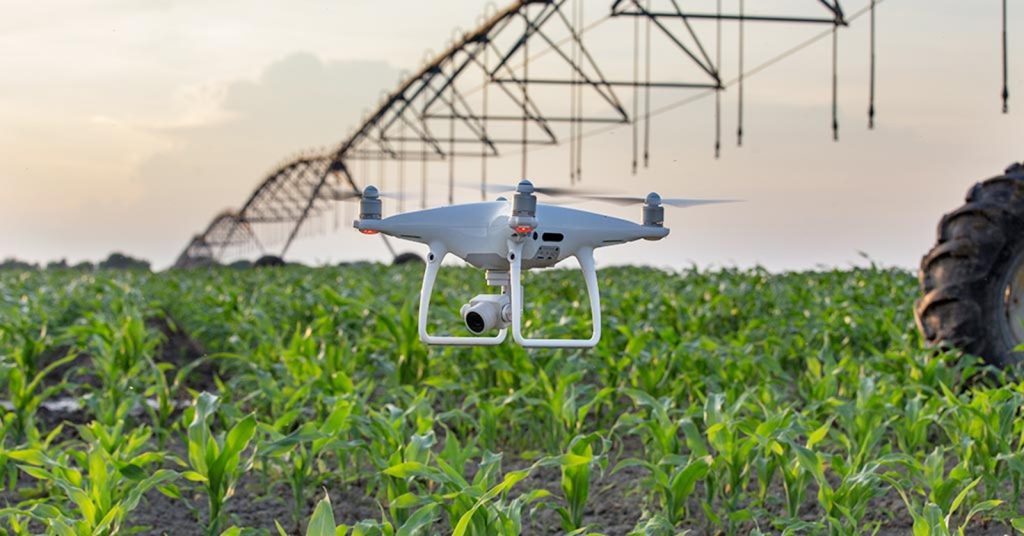
As Rwanda continues to seek new ways to improve the lives of its citizens, technology in agriculture stands out as a powerful tool to transform livelihoods. From the modern farming machinery to high-yield seeds and drones that monitor land and crops, there is hope that Rwandan farmers will move from subsistence farming to profitable agriculture. This significant change, highlighted in this story, is set on not only to reshape agriculture VFbut also to improve the well- being of the entire country.
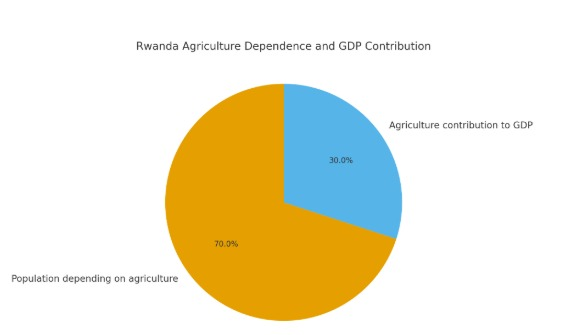
Over 70% of Rwanda’s population depends on agriculture, contributing nearly 30% to the country’s Gross Domestic Products (GDP). However, challenges remain, including food insecurity, lack of markets and crop losses caused by climate change. To address these issues, Rwanda has embarked on new path: Transforming traditional into technology based agriculture (Biotech).
Small-scare farmers make up 91% of the agriculture workforce. New technological approaches, knows as Biotech crops, enhance crop resilience to climate change while preventing disease and crop failure. These innovation aim to improve livelihoods, fight hunger, reduce the use of harmful pesticides that can damage the environment (such as bees) protect the soil and support a growing population of over 14 millions of people.
Challenges farmers continue to face
- Farmers still face losses due to low yields, caused by crop diseases or damage.
- Pesticides, while necessary, can harm the environment and other living organisms, including bees, and degrade soil quality as highlighted by Pacifique NSHIMIYIMANA , Director of Alliance for Science Rwanda.
- Climate change plays a major role, with unpredictable rainfall and temperature patterns leading and financial losses.
Technology as a solution
- Modern machinery now helps farmers plow and harvest efficiently, reducing physically strain and saving time.
- High yield seeds resist the effects of climate change and produce higher yields.
- Mobile applications help farmers monitor soil quality, track crop growth, and understand market price.
- Drone are used to monitor crop health and optimize fertilizer use.
How technology is transforming Agriculture
Research shows that over 85% of farmers use mobile phones to access market prices, weather updates, and agriculture advice. Drone monitor land and detect early signs of crop disease. Smart Nkunganire System (SNS) software insures farmers receive fertilizers on time and at consistent price.
Impact on Rwandans Lives
These innovations will increase food production, reduce hunger, improve incomes, and boost national economic growth. Young people who often leave Rwanda to seek opportunity abroad, will be more likely to stay and to contribute to the local economy.
Farmers speak out
UMURERWA SHIMO Yvette, a professional potato and vegetable farmer in Musanze District , Gatagara Sector said :

‘’We face many challenges. Even though I am a trained professional and passionate about my work we, struggle with losses when crops fail due to disease or whether. Sometimes the money we invest does not come back to us. I am excited that biotech Technology will address these problems for farmers, traders and consumers alike’’.
She added:
‘’The technology will give us seeds that withstand sun, rain, and disease. . We will grow more, feed our markets, earn more income, and inspire others to continue farming. I’ve seen the research firsthand, and these seeds are enhanced without harmful chemicals. This will help us improve our lives, our families, and the country as a whole. Farmers, traders, and consumers will all benefit.
MUKAMA Speciose a maize farmer in Nyagatare said:
‘’My yield doubled after using improved seeds. This allows me to pay for my children’s education and access health insurance.”
TUYISHIME Gisa Emmanuel is a cassava farmer in Southern region of Amayaga , Kigoma Sector . He said:
“Our cassava is like our part of our culture in Amayaga. Because the people here rely on it for almost everything, from food, building houses, to pay to their children at school. It is the main crop we grow, we consume it more than other foods; we boil, roast it, make it into porridge or process it into flour. It has supported our lives and helped us educate our children.

He added that in 2009 and 2010, crops were destroyed by disease called Kabore , which caused significant losses. Amayaga is a major area that provides cassava or flour for the entire country. After Kabore outbreak, MINAGRI supplied those new seeds but even these could only be planted twice, by the third planting, the cassava would still fall ill or fail to grow properly.
This hard various impacts, including that many children dropped out of school, while others had to attend school that they didn’t choose, studying nearby but unable to follow the courses they wanted because they lack money to travel.
Today, He expresses satisfaction with the sustainable solution being developed by researchers promoting technology based on agriculture. They are proving improved seeds that can withstand poor soil and diseases affecting Cassava. This is expected to increase yields, lift farmers out of poverty, supply the markets and ensure that community will no longer face hunger.
Pacifique Nshimiyimana, Director of the Alliance for Science, said that it is not surprising that some people express concerns about the effects of consuming biotech crops, whether among farmers or other Rwandans. He explained:
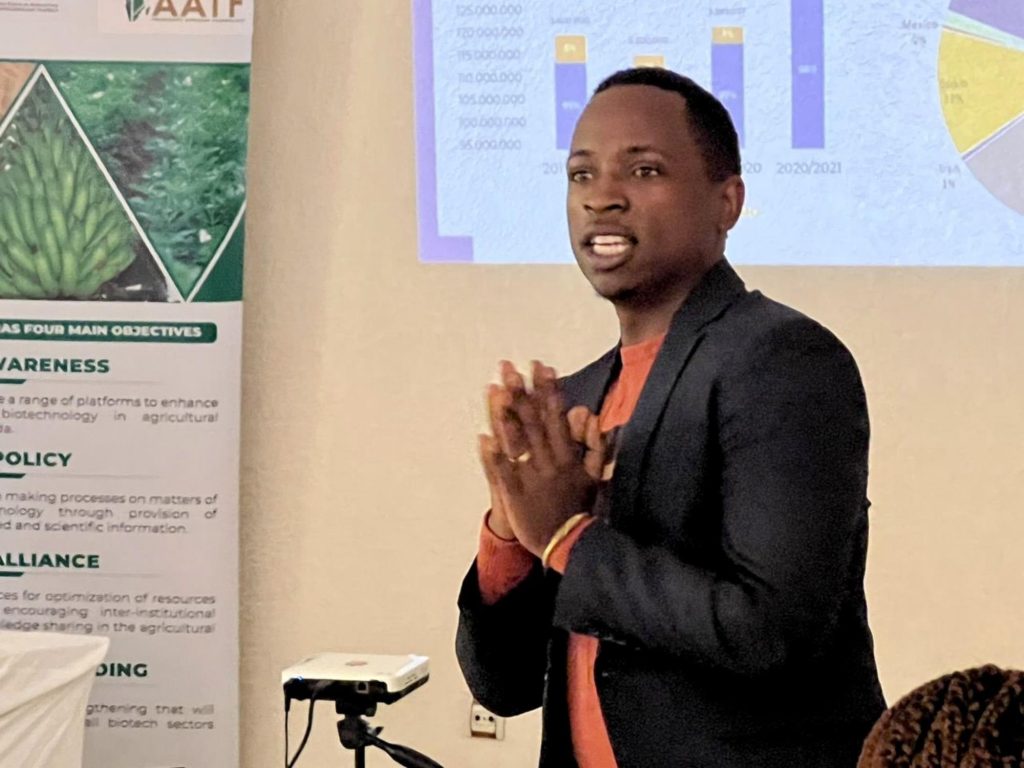
“The reason is that information circulating on social media in recent days is not accurate, and these crops themselves have not yet reached our farmers in a way that allows them to see for themselves that they are safe and comparable to what they are already used to, except that they are more resilient based on the research we conducted.
“Our current goal is that; after training journalists and social media users to provide accurate information widely, is to also train farmers by taking them to the fields where this research is conducted so they can see with their own eyes and confidently plant what they understand well.”
He further noted that when a farmer has the opportunity to cultivate, they can do so without fear that disease or climate changes will destroy the crops tomorrow. They will invest less effort and still harvest properly. For example, 40% of the costs a farmer previously spent on buying pesticides and paying workers to apply them for potato farming can now be used for other needs, while harvesting healthy and uniform crops with full nutrients because the plants will be disease-free and grow well.
NDUWUMUREMYI Athanase who works at RAB and is a good researcher in the branch of root and tuber crops, including sweet potatoes and cassava. He also manages technology-based agricultural research projects in Rwanda and serves as Director of OFAB (the Open Forum on Agricultural Biotechnology, which advocates for technology-based farming).
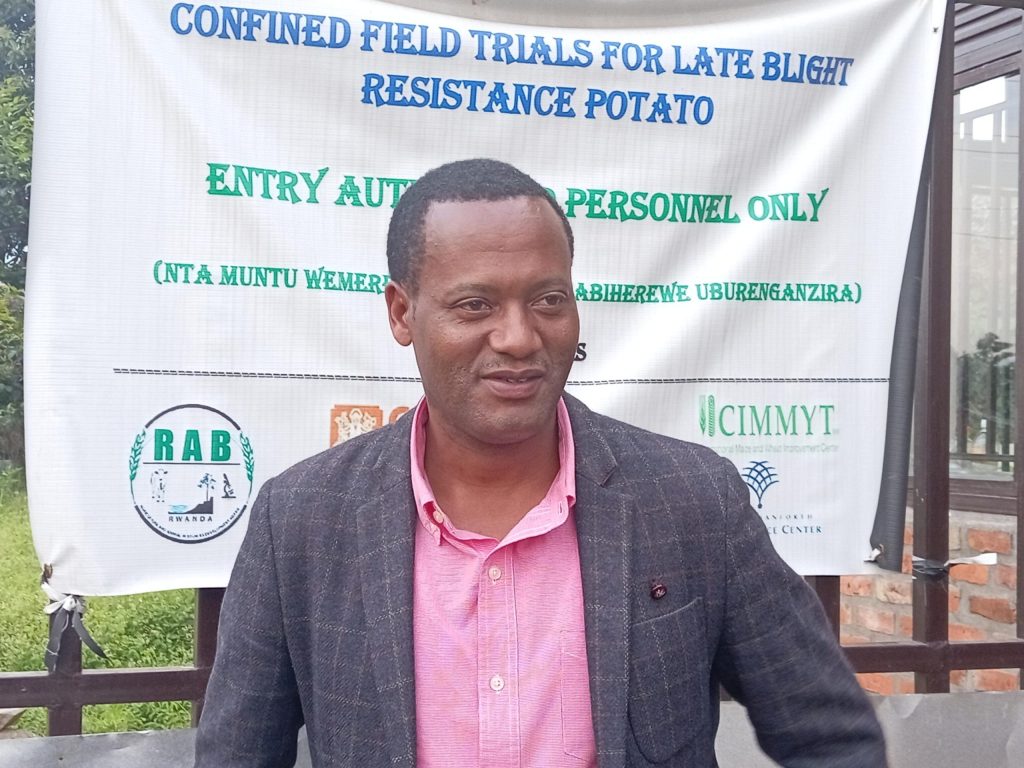
“Agricultural technology is implemented in different ways, but our current focus is on biotech-based approaches. We develop new seeds that can withstand diseases, adverse weather, and difficult conditions. This ensures that farmers get higher yields, markets are supplied, and consumers access nutritious food at affordable prices.” He said:
He added that they are concentrating on staple crops widely grown in Rwanda, in collaboration with the government. For example, they are addressing the cassava problem caused by the ‘kabore’ disease, which has no cure except developing virus-resistant seeds—a solution already achieved through their research. Potatoes also require treatment against the ‘rain disease,’ caused by heavy rains. These treatments are expensive, harm other living organisms, and reduce farmers’ profits. Maize is another critical crop, but it cannot tolerate excessive rain or heat.
He said again that their project aims to develop maize resistant to various pests and diseases. They are also considering work on beans that resist cowpea aphid, as well as rice, soybeans, and vegetables.
“Our research has shown us high-quality seeds, and we hope the government will approve them so farmers can access them. Farmers have long suffered and urgently need these seeds. The Ministry’s slogan, ‘Food in Rwanda,’ reminds us that we need to ensure food security.” He continued:
“Agricultural technology is a powerful tool that will transform Rwanda’s economy. It will help farmers move beyond subsistence farming toward development, ensuring the country becomes self-sufficient and improves the livelihoods of its citizens.” He concluded:
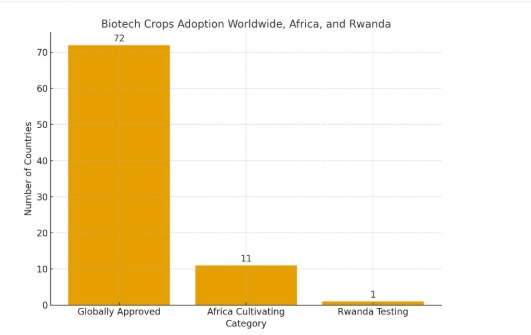
Globally, 72 countries have approved the use of biotech crops, and in Africa, 11 countries have started cultivating them. Rwanda is also testing biotech seeds, and research on crops such as cassava and potatoes shows that these seeds increase yields, improve vegetable and fruit production, provide nutritious food, and strengthen the economy for the country and future generations.
According to the latest data from NISR ,agriculture productivity has significantly improved over the past year. In Season A2024 ,Rwanda cultivated 1.37 million hectare , accounting for 58% of the country’s land area. Here we take an example of maize production lose to 507,985 metric tons-roughly a 30% increase compared to season A2023.-driven largely by the adoption of improved seeds and better farming inputs .NISR report that 64.6% of farming households now use improved seed varieties ,while 39,7% apply a full package of modern inputs including fertilizers and pesticides.